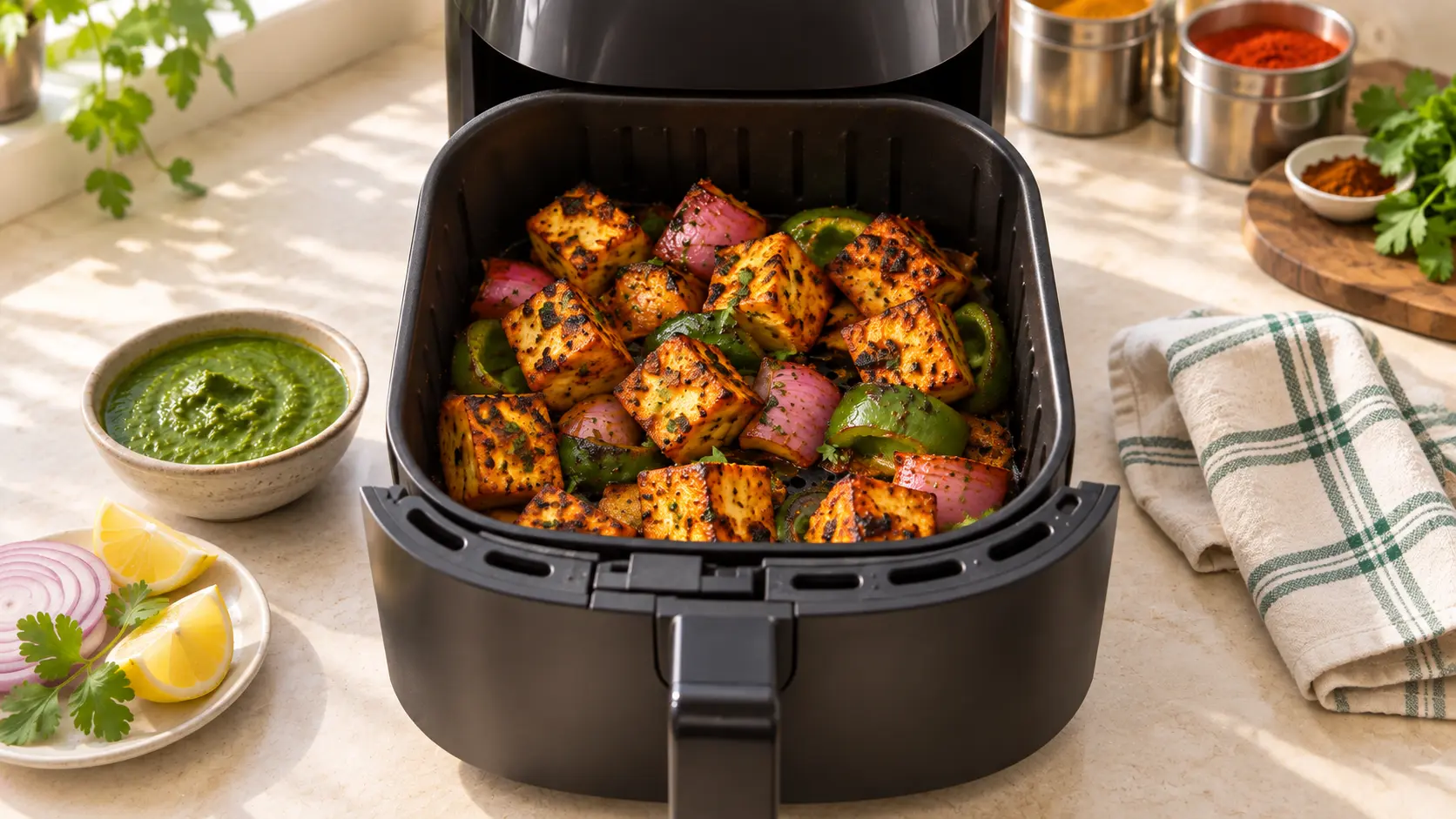
Air-fryer paneer tikka can develop charred edges without a tandoor, but the common failure is dry, rubbery paneer surrounded by watery vegetables. The solution is not simply a preset: use a thick marinade, control surface moisture and stop cooking as soon as the edges brown.
Think of it as the practical Sunday starter: enough smoky masala to make the dining table interested, without turning the kitchen into a full tandoor operation. The aim is familiar tikka character with a method that works on an ordinary weeknight.
Ingredients for a practical batch
- 250g firm paneer, cut into roughly 2.5cm cubes
- Thick curd or hung curd
- Ginger-garlic paste
- Kashmiri chilli, turmeric, garam masala and roasted cumin
- Salt and a little lemon juice
- One to two teaspoons oil
- Onion and capsicum pieces, patted dry
The exact spice blend is flexible. Marinade consistency and piece size influence air-fryer performance more than a minor change in masala.
Method
- Remove excess moisture. Pat the paneer and vegetables dry. Watery capsicum and thin curd encourage steaming.
- Make a coating marinade. It should cling to the paneer rather than pool at the bottom of the bowl.
- Fold gently. Avoid breaking soft paneer cubes. Rest briefly in the refrigerator if convenient.
- Arrange one layer. Leave small gaps. Do not pour leftover marinade into the basket.
- Cook at about 180°C. Check at 6–7 minutes, turn gently and continue until the edges colour.
- Finish immediately. Remove the paneer when browned; residual heat continues cooking the centre.
Why paneer becomes rubbery
Paneer contains moisture and milk proteins. Prolonged high heat drives out water and firms the protein structure. Smaller cubes and lean paneer dry faster. If colour is slow to develop, crowding or a wet marinade may be the cause; extending the cycle can dry the centre before the outside browns.
Basket size and batch quantity
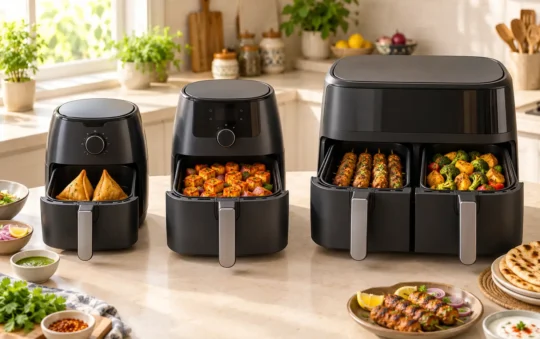
A compact four-litre air fryer can handle a modest 250g batch if the tray is reasonably wide. For 400–500g plus vegetables, a wide six-litre-class basket is more comfortable. If pieces overlap, use two short batches rather than one crowded long cycle.
Skewers or loose pieces?
Loose pieces maximise usable area and are easier to turn. Skewers improve presentation but can reduce capacity and must fit safely below the heating element. Use only accessories permitted by the appliance instructions.
Troubleshooting
| Problem | Likely cause | Adjustment |
|---|---|---|
| Pale and wet | Crowding or thin marinade | Use hung curd, dry vegetables and leave gaps |
| Rubbery paneer | Overcooking | Larger cubes; check earlier |
| Marinade sticks to tray | Excess coating or insufficient oil | Shake off surplus; lightly oil permitted surfaces |
| Uneven colour | Airflow variation | Turn once and rotate pieces |
Reheating paneer tikka
Use a shorter, gentler cycle than the original cook. Begin around 160°C for a few minutes and stop once warmed through. A microwave may keep the paneer softer but will not restore the same surface texture.
Which air fryer works best?
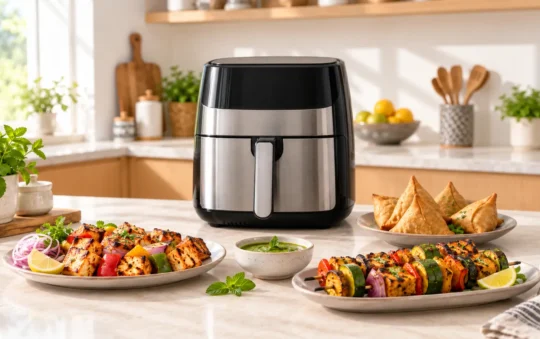
Prioritise a wide basket, controllable temperature and enough capacity for one uncrowded layer. A viewing window can help because the difference between browned and dry may be only a few minutes. See our air-fryer recommendations for Indian cooking.
Method reference: Ministry of Curry’s paneer tikka guide, consulted for preparation principles. Times above remain starting points because appliances and cube sizes vary.