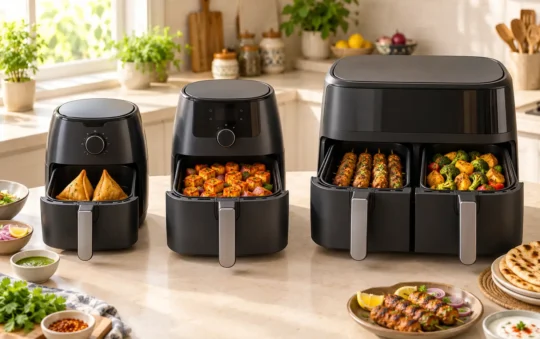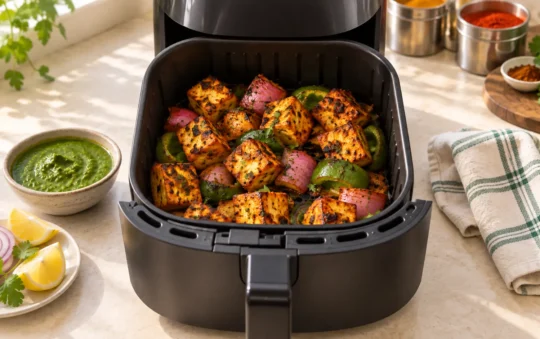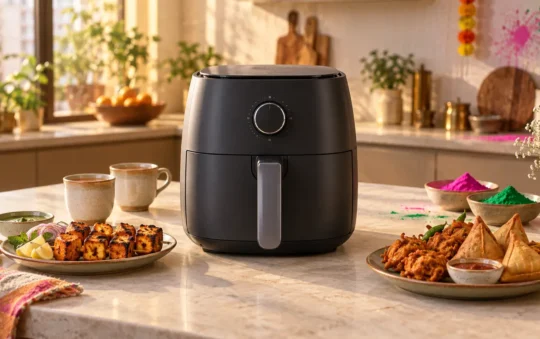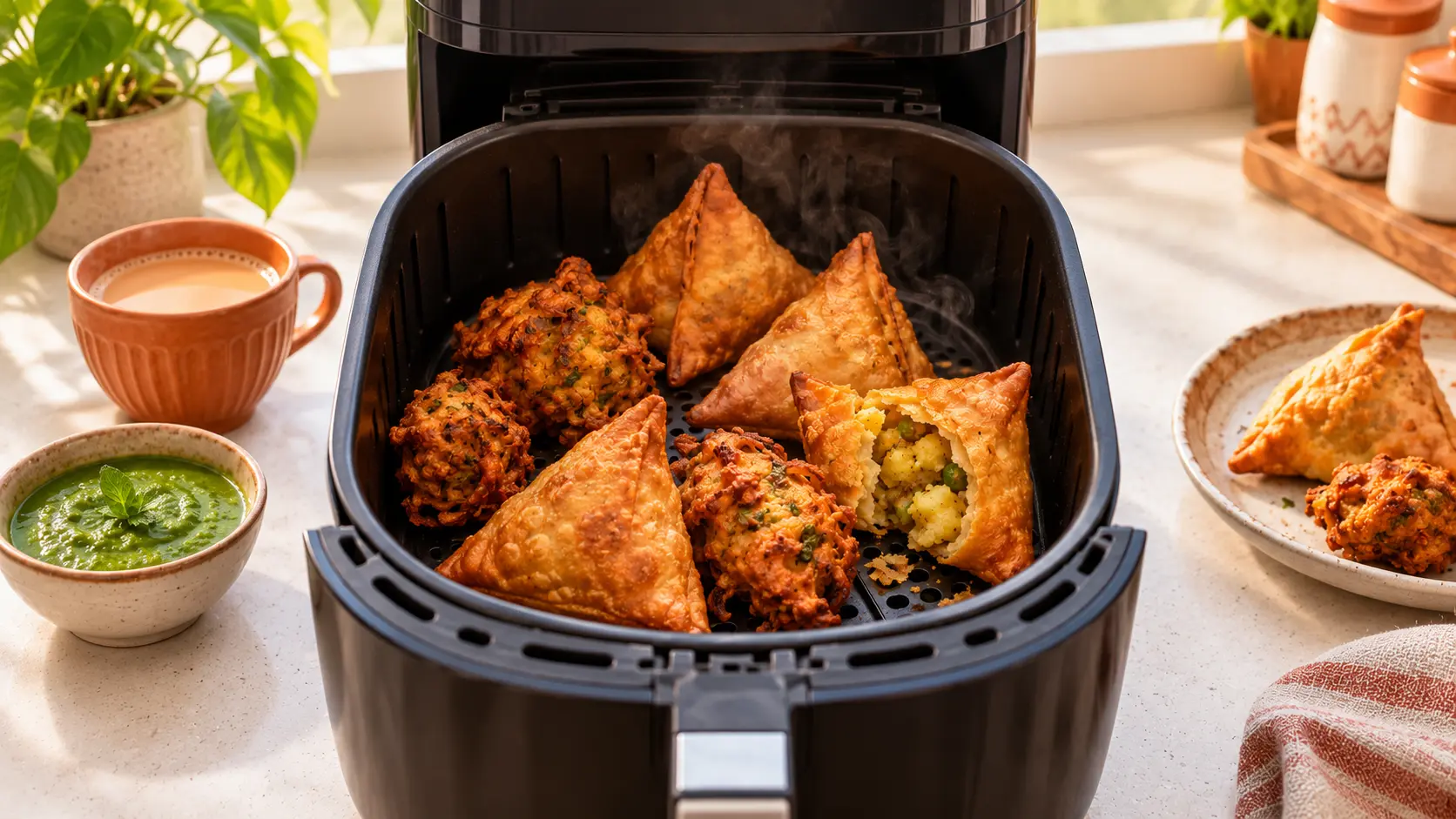
A microwave warms a samosa quickly but often leaves the pastry soft. An air fryer reheats the surface with moving dry heat, making it one of the most useful appliances for leftover Indian snacks. The key is to use enough heat to restore crispness without scorching the exterior before the filling becomes hot.
As the old Bollywood line begins, “Jab tak rahega samose mein aloo…” The aloo may be dependable; yesterday’s crisp pastry is less so. Fortunately, a short air-fryer cycle can make chai-time leftovers feel invited back to the party.
Reheating refrigerated samosas
- Remove the samosas from the refrigerator while the air fryer is prepared.
- Arrange them in one layer with space between pieces.
- Use approximately 170–180°C.
- Turn after about half the time.
- Check that the centre is hot before serving; add short increments rather than one long cycle.
Oil is usually unnecessary because fried pastry already contains fat. A very dry baked samosa may benefit from an extremely light surface brushing, but avoid aerosol propellants unless the appliance manufacturer permits them.
Reheating pakoras, bhajiyas and cutlets
Small pakoras heat faster than a dense samosa. Begin with a shorter cycle and shake the basket once. Thick aloo or vegetable cutlets need more time for the centre. Delicate onion bhajiyas can over-brown quickly at exposed edges.
| Food | Starting temperature | Starting time | Technique |
|---|---|---|---|
| Refrigerated samosa | 170–180°C | 4–7 min | Turn once |
| Small pakora | 170°C | 3–5 min | Shake once |
| Aloo/veg cutlet | 170–180°C | 4–7 min | Allow centre to heat |
| Frozen cooked samosa | 160–180°C | 8–12 min | Check package; turn once |
These are conservative starting ranges, not universal instructions. Follow packaged-food directions where provided and confirm that the centre is thoroughly heated.
Should you preheat?
Preheating can make timing more repeatable and starts crisping immediately, but not every air fryer requires it. Follow the appliance manual. If you skip preheating, expect the first batch to take slightly longer.
Avoid these common mistakes
- Stacking: overlapping snacks trap moisture and soften contact areas.
- Using excessive oil: leftover fried food rarely needs more.
- Reheating too long: pastry may darken while potato filling dries.
- Ignoring storage safety: reheating cannot make improperly stored food safe.
- Lining away all airflow: use liners only as permitted and do not block circulation.
Air fryer versus microwave
The microwave is faster and can keep some fillings moist, while the air fryer restores a crisper exterior. For a large, cold samosa, a short microwave warm-up followed by a brief air-fryer finish can work, but only use microwave-safe utensils and never transfer metal accessories between appliances.
How basket size affects reheating
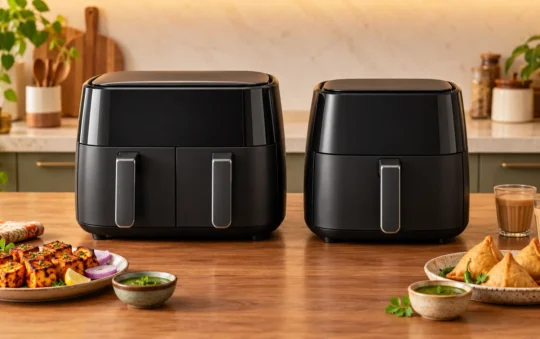
For one or two snacks, almost any basket is adequate. For a family plate, floor area determines whether everything reheats together. A wide 4–6L basket is usually more useful than extra empty height. See our air-fryer size guide and recommended air fryers for Indian cooking.
Frequently asked questions
Can you reheat samosas more than once?
Repeated cooling and reheating reduces quality and can introduce food-safety risk. Reheat only the quantity you intend to eat and follow safe storage practices.
Why is the filling still cold?
The samosa may be unusually large, very cold or heated too aggressively. Reduce the temperature slightly and add short increments so heat reaches the centre without burning the shell.
Can chutney go in the air fryer?
No. Serve chutney separately. Loose liquid can spill, smoke or interfere with airflow.
Food-safety note: discard food that has been stored unsafely or shows signs of spoilage. Reheating guidance addresses texture and normal refrigerated leftovers; it does not reverse unsafe storage.